Buying in the Sequel Trilogy
Choosing within the era.
Which characters carry the most choice
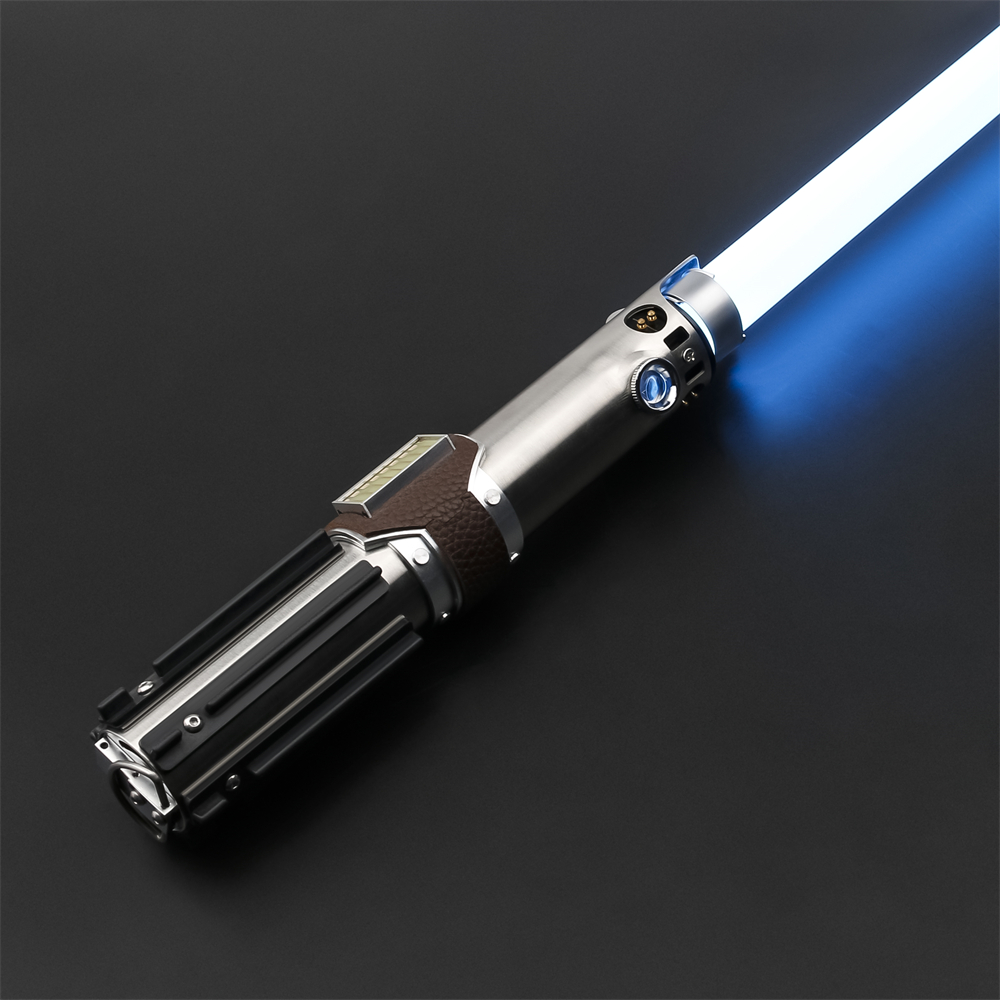
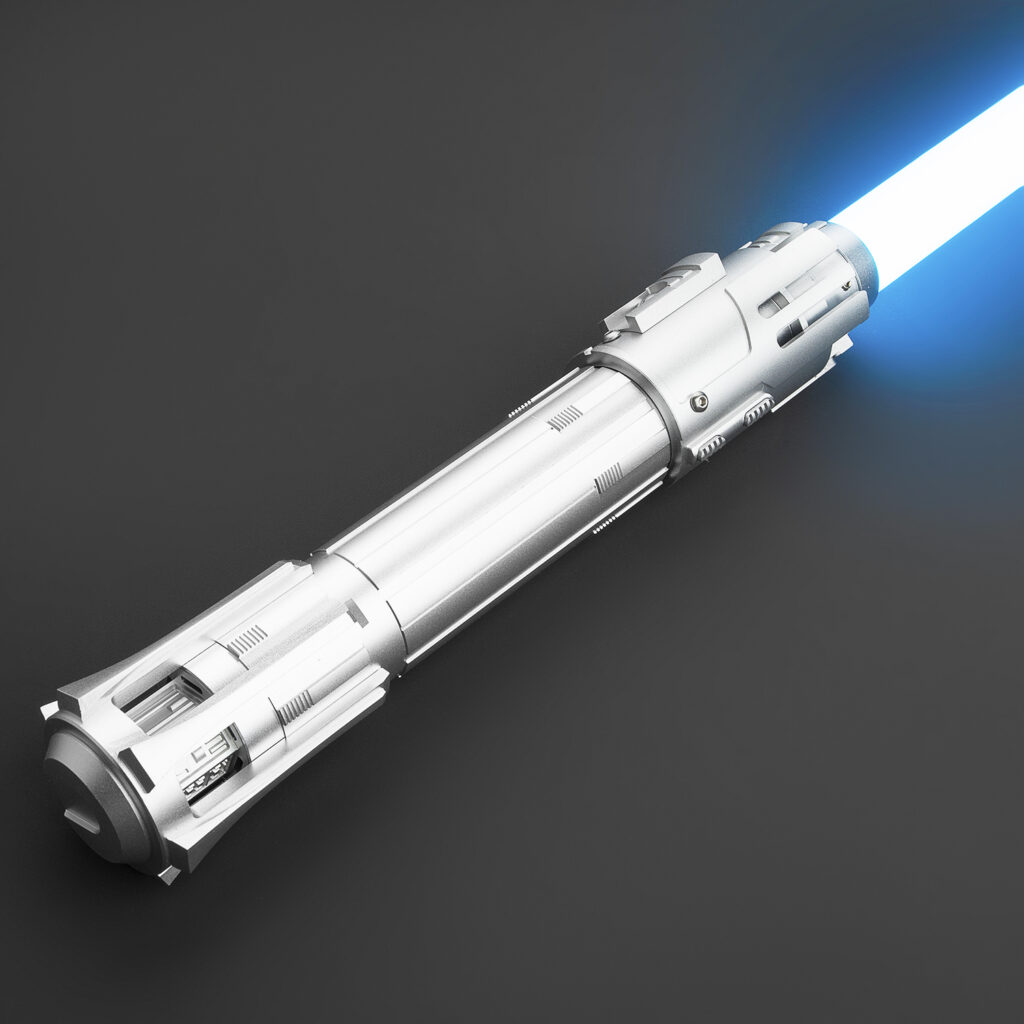
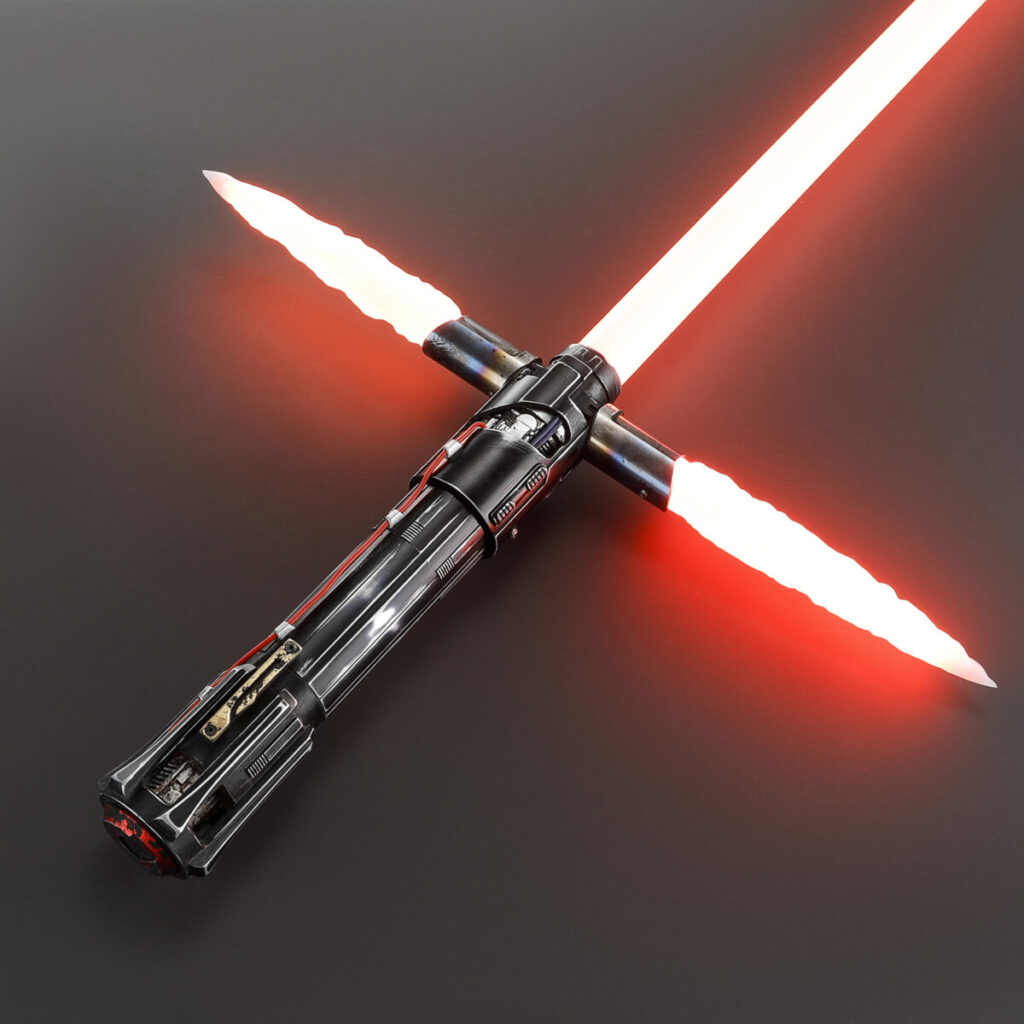
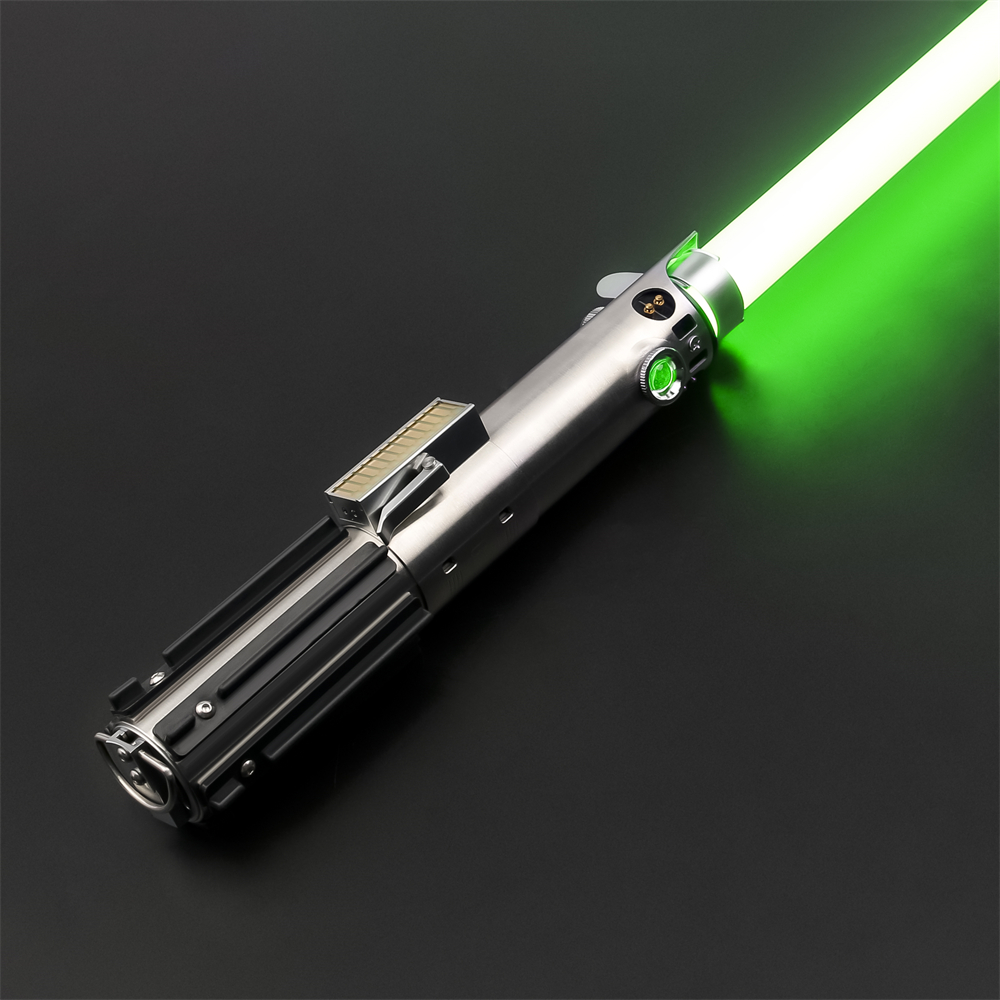
Rey carries the deepest range here — her Graflex hilt appears across multiple Saber Core tiers, from S-RGB baselit builds designed for serious duelling through to Xenopixel V3 neopixel versions with full-colour blade effects and custom sound fonts. That variety reflects how central she is to the sequel trilogy's visual identity, and how differently fans want to own her story: some want a screen-faithful prop to display, others want a blade that can take a hit. Luke Skywalker's Episode VII Graflex sits at the opposite end — a single Proffie 2.2 variant, chosen because that particular combination of board and hilt rewards the kind of collector who wants complete control over fonts and configurations. Kylo Ren's crossguard is similarly focused: one hilt, one character statement. Ben Solo and Dark Rey occupy an interesting middle ground — both single-variant listings, both Xenopixel V3, both representing moments in the sequel story that fans feel strongly about owning in neopixel rather than baselit. If you know exactly which scene lives rent-free in your head, you'll find it here. If you're still deciding between Rey's Episode IX rebuild and her original Graflex configuration, the range gives you room to choose the version that matches how you read her arc.
The hilt shapes this era gave the catalogue
The Sequel Trilogy handed its characters hilts that tell you everything before a blade even ignites. Rey's Graflex — the same weathered salvage-find Luke carried in the Original Trilogy — is a narrow, cylindrical grip built for instinct over intention. Its slim diameter rewards a two-handed draw and a fighting style that hadn't finished inventing itself yet; in the hand it sits light and fast, suited to the wide, improvised arcs of someone who learned to fight alone. The crossguard geometry of Kylo Ren's cracked-kyber design is the era's most distinctive shape: the perpendicular vents flare outward from a thicker, more commanding central body, shifting the balance toward the emitter end and making every grip feel deliberate, aggressive. Holding one changes your posture. Ben Solo's stabilised hilt pulls back toward cleaner proportions — the crossguard remains but the silhouette is resolved, more controlled. Dark Rey's hinged double-bladed staff sits in a category of its own: collapsed, it handles like a short saber with an unusually forward-heavy feel; extended, the weight distributes across both ends and demands a completely different movement vocabulary. Each of these shapes was designed, in-universe or out, as a character statement — and they carry that identity directly into how they feel during a duel or a display.
Duelling grade on Sequel Trilogy hilts
Every hilt in the Sequel Trilogy catalogue is available in either Neopixel or Baselit Duelling configuration, and the choice matters more than it might first appear. Neopixel builds — running Xenopixel V3 or Proffie 2.2 Saber Cores — deliver full-blade pixel lighting, character-accurate ignition effects, and the kind of colour-mixing depth that makes a Rey Graflex or a Ben Solo crossguard look genuinely faithful to the screen. They're the collector's grade: display-ready, app-configurable, and detailed enough to satisfy anyone who's spent time frame-by-frame on The Force Awakens or The Rise of Skywalker. Baselit Duelling builds run a single-colour RGB-X Saber Core and are engineered for contact — a thicker-walled blade, simpler electronics, and a hilt that can take repeated clashes without complaint. If your Sequel Trilogy saber is destined for choreography practice or sparring sessions rather than the shelf, that's your grade. One hilt in this era, the Dark Rey Palpatine Double-Bladed, deserves a specific note: its folding mechanism and extended chassis mean Neopixel is the only configuration we offer for it — the electronics and blade-length requirements of a double-bladed design don't lend themselves to a baselit setup. For everything else, the grade decision comes down to how you plan to use it.
Saber Core choice across the era
The Sequel Trilogy catalogue runs the full Saber Core range — from S-RGB baselit builds designed to take a hit without complaint, right up to Proffie 2.2 for collectors who want total control over every font, every effect, every blade profile. The majority of character replicas here are fitted with Xenopixel V3 Saber Cores, which makes sense for this era: the designs are visually bold, the blade colours are iconic, and Xenopixel V3 delivers the smooth-swing responsiveness and blade lighting depth that sequel-era aesthetics demand. Rey's Graflex — across both her Episode 9 incarnation and Luke's recovered hilt from Episode 7 — is one of the most requested builds in the catalogue. The Proffie 2.2 edition of the Luke EP7 Graflex is worth particular attention: open-source board, full font customisation, blade style editing, and a hilt that carries decades of in-universe history in its weathered finish. Ben Solo's crossguard build on Xenopixel V3 captures the raw, unstable character of that blade with crackling vent effects straight out of the box. And if you're drawn to the darker corner of the sequel timeline, Dark Rey's double-bladed Xenopixel V3 configuration handles the split-staff format cleanly — both blades driven from a single Saber Core, both responding together. Baselit S-RGB options across this era are built for duelling first. If you want a screen-faithful handle you can actually use, without the higher-tier electronics cost, several of the replica hilts are available in that tier — same machined aluminium, same character geometry, different Saber Core.
Explore more — By character · By Saber Core · All eras